Drass, in Ladakh, isn’t the kind of place you choose unless you have a very specific reason to go there. Nothing about it is convenient. The altitude gets to you before you realise, the cold seeps in no matter what you’re wearing and wildlife moves around undisturbed. But that’s also what makes it perfect. The plan was clear from the start: attempt the longest drift on ice ever recorded in India and do it in conditions that wouldn’t give us anything for free.
Drifting on ice doesn’t sound like a major deal until you realise where you’re standing. Drass is the second coldest inhabited town on Earth, a place that has seen temperatures drop to -60 degrees Celsius, and one that still carries the weight of the Kargil War in the mountains that surround it. It’s hard to stand here and not think about what this land has seen, or how close it came to being lost. And yet, on a frozen patch of ground in the middle of it all, we found ourselves lining up a Mahindra BE 6.
Why Mahindra BE 6 Was Ready for the Ice Drift Challenge
It has all the right fundamentals required to deliberately break traction, engage opposite lock and hold it there until skill gives up and brings you back in a straight line. 282bhp, 380Nm and RWD means drifting is easy. But drifting on ice? That’s not as easy as it sounds.
Ice driving, as a discipline, doesn’t belong here. It lives in places we’ve only seen on YouTube – frozen lakes in Scandinavia, Finland, Norway, tracks that are mapped out, maintained and understood. Drivers go back to the same sheet of ice, the same layout, the same reference points every year. There’s a rhythm to it; a sense of familiarity that lets you push further each time. Drass doesn’t work like that. There are no prepared tracks here. No one comes in overnight to resurface the ice or check for consistency. What you get is raw and natural. It changes constantly depending on the wind, temperature and time of day. It’s not something you can master but rather adapt to. You walk on it and the first few steps will feel reassuring enough, but stand in the same place for long enough, and the crisp sheet of ice under you will start to break, pulling you straight into slush that’s underneath it. And when you’re trying to hold a car in a controlled slide, these can become major hazards even before you know it.
Preparing for India's Longest Ice Drift Attempt
The record would come later; what mattered first was understanding what we were up against. There was no rushing into the car, no immediate attempt at the record. Instead, it was time spent walking the surface, marking out a circle, and then walking it again. Trying to understand not just where the car would go, but how the ice beneath it might respond. Because unlike tarmac, where grip is largely consistent and predictable, this was a surface that could change character halfway through a single arc. The driving of the BE 6 had to be entrusted to a very skilled person because if you get stuck here, there’s no coming back from it. Enter National Racing Champion, Karminder Pal Singh, one who’s done stuff such as this long enough to know how it needs to be done.
Reading the Ice Before the Record Attempt
His approach was very different from what I would’ve thought. He didn’t look at the expanse, but section-by-section. He crouched down, pressed into the ice and traced lines that weren’t immediately visible to the naked eye. There were areas where the thickness varied slightly, patches that had refrozen differently, and sections that were more exposed to wind and hardened unevenly. None of it was dramatic enough to stand out on its own – but together, it was enough to influence the outcome of a run. The crew moved ice blocks from one place to another, flattened out the whole surface and fixed everything according to what Karminder asked. Only once the groundwork felt right did BE 6 come into the picture.
The First Attempt on the Ice
In theory, what we were attempting sounds straightforward. Initiate the drift, hold the angle, keep it consistent and let the distance build. But out here, each of those steps carries its own set of variables. Too much input and the car rotate too quickly. Too little and it straightens. Hold the throttle a fraction too long and the rear steps wider than you can catch. Come off too early and the drift dies before it stabilises. And all of that is before the surface decides to change on you. In merely a few minutes, Karminder was wearing his helmet, strapped into the driver’s seat and ready to go around in circles with opposite lock on the steering wheel.
He started and the first attempt lasted just long enough to make the whole point of a raw surface even clearer. The rear stepped out cleanly and for a moment it looked like we would reach Leh in time for lunch. The car settled into the slide, the arc began to form, and you could see the beginnings of a circle taking shape against the white. But then, midway through, the balance shifted. Subtly at first and then all at once. The tyres found grips where they weren’t supposed to. The car tightened its line, straightened itself out and the drift ended before it had even properly established itself.
Silence followed.
No one rushed in with any explanation or advice. No one needed to. Out here, you don’t immediately question the driver – you question the surface. Because often, that’s where the answer lies. Karminder stayed in the car for a moment longer than expected. Hands still on the wheel, eyes fixed ahead, just processing. And then, without saying much, he stepped out and walked straight to the section where it had fallen apart. That part of the process mattered just as much as the driving itself. This wasn’t about repeating the same attempt and hoping for a better result. It was about understanding why it didn’t work and adjusting accordingly. The line was re-evaluated, the circle tightened slightly, the approach tweaked to get through that inconsistent section earlier – before the drift had the chance to fully open and become vulnerable to a sudden change in grip. What followed felt more deliberate than a second attempt – like everything had been reset but not forgotten. The car rolled back into position, the line now slightly tighter, the approach adjusted just enough to account for what the ice had revealed. There was no big team huddle, no last-minute instructions being shouted across. Everyone knew what needed to change and we were all set to witness what comes next.
The Drift That Rewrote the Record Books
Karminder eased the Mahindra BE 6 into motion again, building speed gradually before committing. The initiation this time was cleaner, but more importantly, it was calmer. The rear stepped out, the steering caught it early and the car settled into a smooth slide. The first few metres were the most critical, getting past that inconsistent patch before the drift could grow wide enough to be affected by it. And this time, it did. From the outside, it almost looked slow. The BE 6 tracing a smooth arc on a blank canvas, snow beginning to build along the outer edge as the tyres worked through the surface. But from inside the car, it was anything but relaxing. Every small correction mattered. Every change in throttle had to be measured. The steering was never still, just constantly adjusting, reading, and reacting often before the change in surface was even visible.
One rotation turned into two. Then three. You could see the circle forming now, clean and consistent, carving itself into the ice. The entire crew was praying, hoping to get the best result out of this attempt. There was no shouting, no calling out numbers – just eyes fixed on the car, watching the master hold that delicate balance between grip and slip. The BE 6 kept circling, the arc widening slightly as confidence built, the snow wall growing taller with each pass. The silence was dramatic and the only sound around was the crunching of ice under the tyres and the wind whipping at us.
And then, just as deliberately as it had begun, it ended. For a moment, nothing happened. The car stood still in the centre of the circle it had just carved out, the mountains in the background, the mark on the ice telling the entire story. Then the noise came back. Clapping, cheering, a few nods, a few smiles and the officials stepping in to measure what had just been done. Numbers were checked, distances confirmed, everything documented the way it needed to be.
418 - Metres That Made History
418 metres, it doesn’t sound like much when you say it out loud. But standing there, looking at that near-perfect ring on raw, unprepared ice in a place like Drass, it felt like a number that had been earned properly. Because this wasn’t just about the drift. It was about where it happened.
About doing something like this without the safety net of prepared tracks, without consistency, without certainty. And maybe that’s what stays with you the most.
Not the record, but the process of making it happen. Ice driving, for the longest time, has lived somewhere else. On frozen lakes in countries that have built a culture around it. Places where the conditions are known, controlled and repeated. But here, in Drass, none of that exists. And yet, on a cold morning with temperatures around -6 degrees celsius, on a surface that owed us nothing, it happened anyway. India has a new ice drift record and that too with an electric SUV!
Tags
Mahindra BE 6, India's Longest Ice Drift Record, Electric SUV India, Mahindra Electric SUVs, BE 6, Ice Drift Record, Record Breaking EV, Drift Driving
News and Press Releases
10 February 2026
Mahindra Scales Up Aftersales Service...
Mahindra Scales Up Aftersales Service Operations in Delhi NCR

14 January 2026
Mahindra XEV 9S and XUV 7XO record 93,689 Bookings
Booking Value of over ₹ 20,500 crore (*at ex-showroom price)

04 July 2025
Mahindra to Commence Deliveries of BE 6 and XEV 9e Pack Two from End-July
Now with both 59 kWh and 79 kWh battery options
9 Apr 2025
Mahindra Delivers 3000 All-Electric Origin SUVs Across India
Overwhelming response for both XEV 9e and BE 6
14 Feb 2025
Mahindra Electric Origin SUVs create new record in the EV category securing 30 179 bookings on day 1
Registered a booking value of ₹ 8472 crores (at ex-showroom price)

5 Feb 2025
Mahindra eSUVs to open bookings from 14th Feb, 2025
9 variants of the XEV 9e & BE 6 to be available for booking
14 Jan 2025
BE 6 makes its gaming debut in BGMI
KRAFTON X Mahindra redefine virtual engagement for gamers
7 Jan 2025
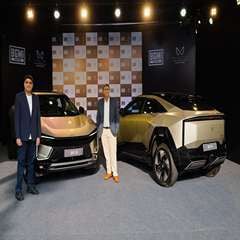
Prices for XEV 9e & BE 6 top variants announced
Test drives to begin from 14th January in select cities
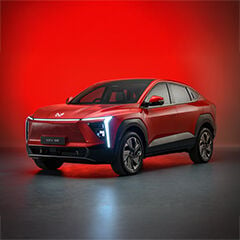
7 Dec 2024
Mahindra to contest brand rights of BE 6e in court
Meanwhile, to name its Electric Origin SUV “BE 6”
29 Nov 2024
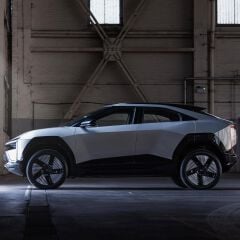
Unprecedented Safety of Mahindra eSUVs Demonstrated
Showcased: Live EV Crash and Battery Torture Tests

29 Nov 2024
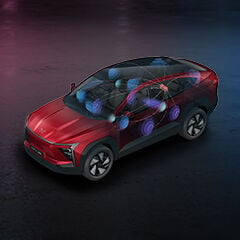
Sonic Studio Experience by Mahindra
Immersive in-cabin audio experience in BE 6e & XEV 9e
26 Nov 2024
Mahindra's Electric Origin SUVs launched at Unlimit India
XEV 9e starts at Rs. 21.90 Lakh and BE 6e at Rs. 18.90 Lakh

22 Nov 2024
Mahindra Teases Sketches of BE 6e & XEV 9e
World Premiere at UNLIMIT INDIA, on 26th November in Chennai

21 Nov 2024
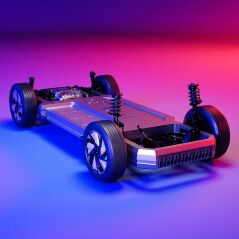
INGLO: Mahindra’s Electric Origin Architecture
XEV 9e & BE 6e World Premiere on 26th November in Chennai
04 Nov 2024
Mahindra debuts Electric Origin SUVs Named XEV 9e and BE 6e
World Premiere at UNLIMIT INDIA, on 26th November in Chennai

8 Jan 2025
New state-of-the-art EV manufacturing facility unveiled in Chakan
Next-gen EV plant to be dedicated for EV manufacturing & battery assembly