The Alubari bridge I’m on connects Namsai — the home of the Golden Pagoda — to Tezu. “We’re a little cracked in the head,” I chuckle. On a two-day shoot schedule, we’re attempting a record run on a bridge we’d only seen in pictures from 2009. No recce, no warm-up, just straight into it.
Pressure, Briefing and Final Go-Ahead
The train of thought is broken by trained medics, who quickly run checks and give me the go ahead. I’m expectedly on the edge of this. The cold shower in the morning, the black coffee I hurriedly gulped and the nervous chatter among the crew in the morning meant what we were about to do wasn’t easy.
It doesn’t help that I’m told we now have just 3 minutes to get the job done. That’s a third of the originally promised 9 minutes, but I have no time to protest. An energy drink and a customary safety briefing later, I find myself strapped into the driver’s seat of the Mahindra BE 6. Traction controls off. Race mode on. Hands tight on the wheel, a quick prayer and go.
Inside the Mahindra BE 6
The mission is seemingly simple on paper: “Acheive the top speed of the Mahindra BE 6 on the bridge of Alubari.” On Mahindra’s state-of-the-art proving track on the outskirts of Chennai, the BE 6 would happily sit at its indicated top speed of 202kmph all day long. But out here in the Northeast, the situation is different. Besides, achieving speed and being able to hold it with confidence (on public roads) are two very different things.
That’s before we get to some real-world concerns. For starters, you’d probably need to file a petition to raise the speed limit. Thankfully, Mahindra had already handled that by cordoning off the road for us. Then there’s the car itself. Regular ICE cars would scream hoarse here. Mahindra took care of that too with a BE 6. A 286bhp, tyre-shredding exercise in aerodynamics. I looked through the windscreen, it’s bright and sunny.
Camera crews set up. Right then, it’s record time. The Alubari bridge is about under 3km long. The BE 6 takes roughly 1.5km to reach its top speed of 202kmph. I want to maintain this speed for as long as I can, but that means there’s less than a kilometre to back off, brake and come to a complete stop. While the quality of tarmac here is usually solid, bridges are a different story. Expansion joints, loose gravel from passing trucks and crosswinds from the mighty Lohit River are never forgiving.
The High-Speed Run to 202 kmph
The scenery becomes a slow blur as I mash the throttle into the floor mat. 0-100kmph is dispatched in a nonchalant 6.7 seconds. Track day muscle memory kicks in. Around 100kmph, I hit boost mode. About 33 seconds in, we were doing 202kmph. I should’ve gotten back off almost immediately — but Pete Mitchell in me had other plans. “Just a little more.” And it paid off. Eight seconds at top speed, and still enough room to slow down and come to a complete stop without unsettling the car. That was my first run. We went back, exchanged a few hugs and lined up again, just to be sure. Same result. Same consistency. And just like that we now hold the record for the highest top speed achieved by an electric SUV.
Tags
Mahindra BE 6, BE 6 top speed, 202 kmph record, electric SUV performance, EV top speed run, Mahindra electric SUV, high speed EV test, Alubari Bridge, High-Speed EV Run, Real-World EV Testing.
News and Press Releases
10 February 2026
Mahindra Scales Up Aftersales Service...
Mahindra Scales Up Aftersales Service Operations in Delhi NCR
14 January 2026
Mahindra XEV 9S and XUV 7XO record 93,689 Bookings
Booking Value of over ₹ 20,500 crore (*at ex-showroom price)

04 July 2025
Mahindra to Commence Deliveries of BE 6 and XEV 9e Pack Two from End-July
Now with both 59 kWh and 79 kWh battery options
9 Apr 2025
Mahindra Delivers 3000 All-Electric Origin SUVs Across India
Overwhelming response for both XEV 9e and BE 6
14 Feb 2025
Mahindra Electric Origin SUVs create new record in the EV category securing 30 179 bookings on day 1
Registered a booking value of ₹ 8472 crores (at ex-showroom price)

5 Feb 2025
Mahindra eSUVs to open bookings from 14th Feb, 2025
9 variants of the XEV 9e & BE 6 to be available for booking
14 Jan 2025
BE 6 makes its gaming debut in BGMI
KRAFTON X Mahindra redefine virtual engagement for gamers
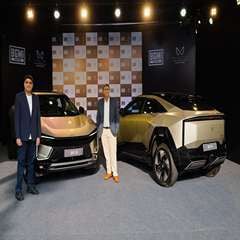
7 Jan 2025
Prices for XEV 9e & BE 6 top variants announced
Test drives to begin from 14th January in select cities
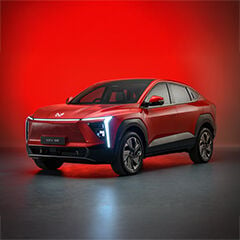
7 Dec 2024
Mahindra to contest brand rights of BE 6e in court
Meanwhile, to name its Electric Origin SUV “BE 6”
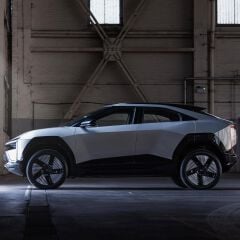
29 Nov 2024
Unprecedented Safety of Mahindra eSUVs Demonstrated
Showcased: Live EV Crash and Battery Torture Tests

29 Nov 2024
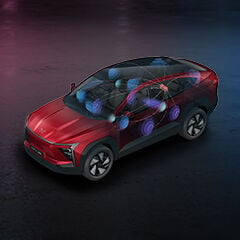
Sonic Studio Experience by Mahindra
Immersive in-cabin audio experience in BE 6e & XEV 9e
26 Nov 2024
Mahindra's Electric Origin SUVs launched at Unlimit India
XEV 9e starts at Rs. 21.90 Lakh and BE 6e at Rs. 18.90 Lakh

22 Nov 2024
Mahindra Teases Sketches of BE 6e & XEV 9e
World Premiere at UNLIMIT INDIA, on 26th November in Chennai

21 Nov 2024
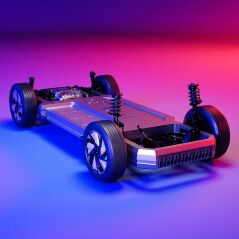
INGLO: Mahindra’s Electric Origin Architecture
XEV 9e & BE 6e World Premiere on 26th November in Chennai
04 Nov 2024
Mahindra debuts Electric Origin SUVs Named XEV 9e and BE 6e
World Premiere at UNLIMIT INDIA, on 26th November in Chennai

8 Jan 2025
New state-of-the-art EV manufacturing facility unveiled in Chakan
Next-gen EV plant to be dedicated for EV manufacturing & battery assembly